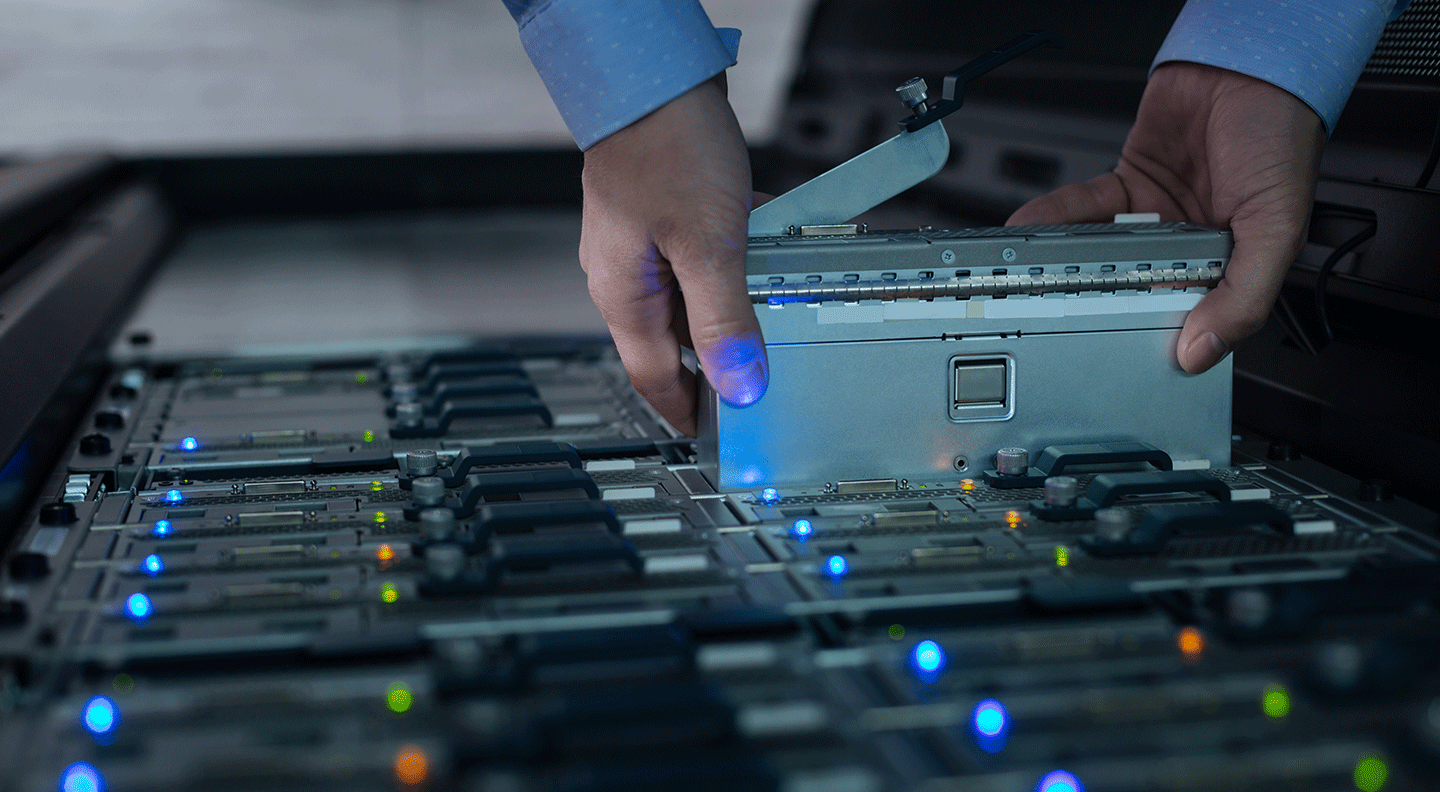
Data center infrastructure and strategy shift as dynamically as the technology they support. Meeting today’s demands requires more than performance upgrades, it calls for a strategic approach to how infrastructure is deployed, maintained and ultimately retired. Forward-looking organizations are rethinking hardware lifecycle management as a core element of future-ready data center operations.
Why Data Center Decommissioning Matters More Than Ever
Retiring infrastructure is no longer the end of the line, it’s a high-impact opportunity. With the right partner, decommissioned hardware becomes a source of recovered value, extended performance, and measurable progress toward circularity. Secure decommissioning is just the starting point – asset recovery is where the real return begins.
When evaluating a vendor to support your next data center transition, consider these key questions, not just to protect your data, but to improve your bottom line.
1. A decommissioning and lifecycle partner should do more than remove and recycle hardware.
A true recovery specialist looks first for ways to redeploy assets within your organization or remarket them through global resale channels to maximize financial return and sustainability gains.
Key Considerations
- Can they refurbish and redeploy enterprise gear (servers, drives, memory) internally or across regions?
- What resale channels do they offer?
- How do they determine which assets can be resold?
2. How do they ensure secure data destruction – both onsite and offsite?
With evolving data privacy laws and rising cyber threats, secure data destruction must be non-negotiable.
Key Considerations:
- Do they follow global standards like NIST 800-88, IEEE 2883, ISO 27001, and R2v3?
- Can they provide on-site services, such as physical shredding or degaussing, for sensitive locations?
- Are their field teams background-checked, trained, and certified?
3. What kind of value recovery can I expect from my retired equipment?
The global demand for second-life enterprise hardware continues to grow, and your retired assets could be more valuable than you think.
Key Considerations:
- Does the vendor have a global resale network? What resale value benchmarks can they share?
- How do they assess and grade equipment for remarketing?
- Do they offer serial-level chain of custody and transparent downstream resale reporting?
4. Can they support redeployment across regions or business units?
Organizations with multiple data centers or international locations benefit from an ITAD partner who can recertify and redeploy assets to where they’re needed most.
Key Considerations:
- Can the vendor coordinate logistics and configuration for efficient redeployment?
- What testing and refurbishment capabilities do they offer for enterprise-grade hardware?
- How do they ensure compliance during asset transfers between countries?
5. How does the ITAD vendor support sustainability goals and carbon reporting?
Decommissioning isn’t just about asset removal, it’s a sustainability opportunity. Organizations now report on Scope 3 emissions and circular economy performance.
Key Considerations:
- Can the vendor provide carbon avoidance metrics for redeployed and remarketed assets?
- What percentage of assets are refurbished, remarketed, or diverted from landfill?
- How do they handle downstream recycling for non-viable equipment?
6. What data protection measures does the vendor offer during asset recovery and remarketing?
When reselling or redeploying hardware, data security is paramount. The right partner should combine verified data destruction with full traceability.
Key Considerations:
- Do they use NIST 800-88 r1 or IEEE 2883 compliant data destruction methods?
- Can they provide certificates of data destruction for each serialized drive?
- Is asset tracking maintained throughout the process?
7. Can the vendor manage full-site decommissioning and asset logistics globally?
Redeployment and resale are only part of the picture, you still need a partner that can safely decommission, pack, remove, and ship your equipment efficiently.
Key Considerations:
- Do they provide on-site teams for asset tagging, packing, and chain-of-custody?
- Can they manage secure logistics across multiple geographies?
- Do they work within tight data center timelines or phased shutdown schedules?
8. What kind of documentation and reporting do they provide?
A well-documented ITAD process is key for audits, regulatory compliance, and internal accountability.
Key Considerations:
- Do they provide serialized inventory and reconciliation reports?
- Are certificates of data destruction and carbon reporting provided?
Confidently Partner with SLS
The role of the ITAD vendor has vastly expanded. Today’s partner must not only protect your data and streamline your decommissioning process, they must also help you reduce environmental impact, recover asset value, and deliver globally consistent service with full transparency.
As a single-source global supplier, Sims Lifecycle Services (SLS) supports data centers with end-to-end secure and scalable solutions. Our programs are built to align with your business goals, security requirements, and sustainability mandates.
Whether you’re planning a full-scale decommissioning or phasing out select assets, SLS brings the global expertise, proven processes, and circular economy focus to help you execute with confidence.
Shutting Down a Data Center?
We handle full data center decommissions. From racks to secure data destruction to asset resale and recycling.
More Articles
-
Reduce Hardware Maintenance Costs During Cloud Migration
Read more: Reduce Hardware Maintenance Costs During Cloud Migration -
ValidCore – Recertified GPUs for Scalable, Cost-Efficient AI
Read more: ValidCore – Recertified GPUs for Scalable, Cost-Efficient AI -
Maximize Value from Retired Tech
Read more: Maximize Value from Retired Tech