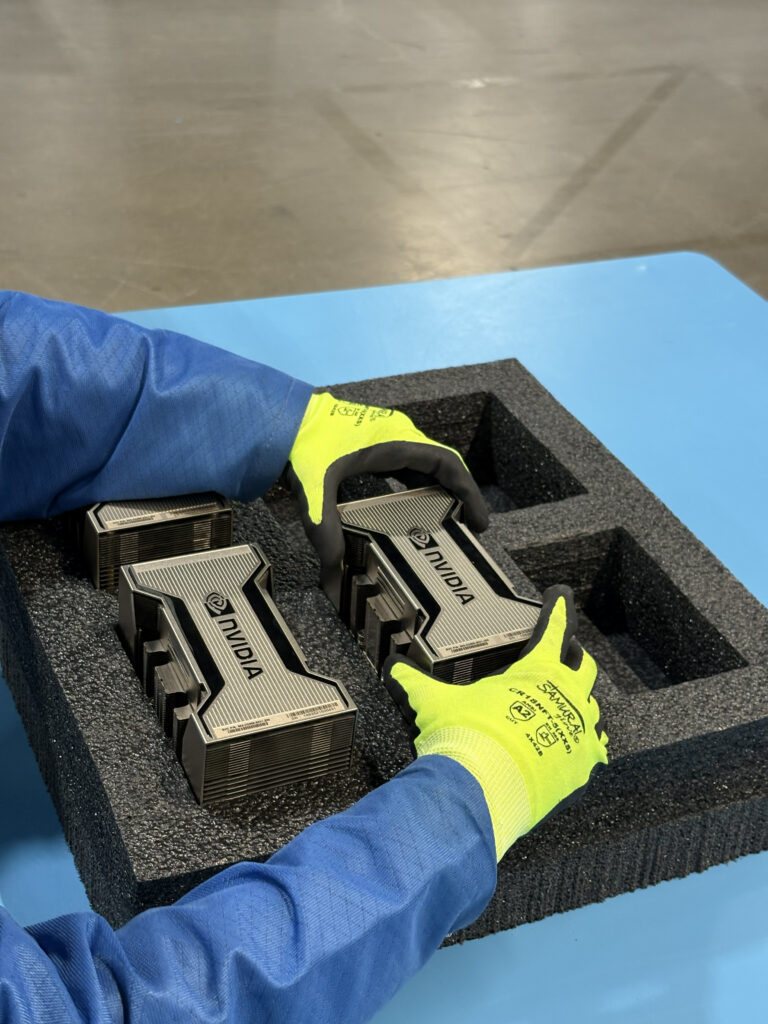
The Second Life of the GPU
What a retired AI fleet is worth, and why most operators recover less
Every data center operator who has built AI capacity in the last three years now faces a second decision that carries almost as much money as the first: what to do with the hardware when it is replaced with the latest generation.
The first big fleets of AI accelerators, the GPUs that run AI training and inference, went into production across 2022 and 2023, and those fleets have now hit their refresh cycles. Thousands of GPUs are leaving the floor, and most of them run exactly as well as the day a technician racked them.
Here is the part many operators miss: a retired GPU fleet commands far less on the open market than it should.
The gap does not track the hardware’s value. It tracks what a buyer cannot verify. A used accelerator can power on, clear a quick diagnostic, and look pristine, yet still hide memory degradation, a punishing thermal history, or silent computational errors that surface only under sustained load. Buyers know this, so they price in the risk, and that discount lands straight on the seller’s recovery.
Sims Lifecycle Services (SLS) built its GPU certification program to close that gap. The program swaps “trust me” for documented evidence: performance validation, silent-data-corruption screening, machine-vision inspection, firmware verification, and certified data sanitization, each tied to a serialized record that follows the unit. Verified inventory clears faster, and it clears at a higher price.
The same substantiation that lifts a seller’s recovery lets a buyer deploy on day one. Regional cloud providers, research institutions, neoclouds, and enterprises scaling inference now write second-life GPUs into their capacity plans. They want hardware they can get today, hardware that returns more per dollar, and hardware someone has proven before it ships.
This paper traces where the supply comes from, why the value gap opens, and how a lifecycle turns retired accelerators into recovered value for sellers and trusted compute for buyers.
01
The Refresh Wave Is Here, and It Is Larger Than the Last One
The constraint on AI compute has shifted from budget to hardware availability. New-generation accelerators carry long lead times, and the largest buyers claim the bulk of each production run. The four largest hyperscalers, Amazon, Alphabet, Microsoft, and Meta, guided to combined 2026 capital spending of roughly $725 billion, up about 77 percent from 2025, with most of it aimed at AI infrastructure.
At the same time, a large new source of capacity is opening up: the GPUs coming out of production. Newer silicon displaces the accelerator fleets that hyperscalers and the largest AI operators bought during the 2022 and 2023 build-out. This follows a planned cycle rather than a wave of failures, and accelerators as a class reach that cycle at scale for the first time.
The first factor is efficiency. Operators do not retire GPUs that stopped working. They retire GPUs that a better performance-per-watt argument has beaten. The next generation earns more from the same power and rack space, so operators pull hardware that still runs perfectly well.
The second factor is heat. An AI accelerator runs flat out around the clock, and that pace ages it faster than a general-purpose server that idles between jobs. Operators plan a two-to-three-year service life for these parts, far shorter than the five to seven years a traditional server earns.
Liquid cooling is the third factor. These systems share cooling across an entire rack, so operators pull whole racks at a time rather than single nodes. Supply arrives as full-rack and full-fleet events instead of a trickle of returns, which raises the bar for any disposition partner.
For most organizations that want this hardware, the previous generation fits the job. Training frontier models demands the newest silicon, but most teams do not train frontier models. They run inference, private AI, HPC, and research, and those workloads reward predictable performance, software compatibility, and fast deployment over raw peak throughput. Inference alone will consume roughly two-thirds of AI compute in 2026, up from about a third in 2023. More and more buyers want the very hardware now coming out of production.
02
The Trust Discount: Why Sellers Recover Less Than a Fleet Is Worth
A buyer can size up a used server quickly. The market spent twenty years building a shared language for the category. Configurations follow standards, condition grades carry roughly the same meaning from one seller to the next, and a buyer prices a unit off a spec line without much anxiety.
A used GPU offers none of that comfort. Its failure modes stay hidden until the right conditions draw them out. A card can power on, clear a basic diagnostic, and look pristine to the eye, then throttle under sustained load, carry high-bandwidth memory degradation, or reveal a thermal history that surfaces only hours into a real workload.
Faith carries a price. Buyers discount for the risk of the unknown, and that discount comes straight out of the seller’s recovery. Yet the hardware itself has lost no value along the way. It has lost only the proof of that value.
Silent data corruption is the most severe failure mode of all, and the hardest to detect. A card with this fault produces wrong results and reports that everything looks fine. It might compute that one plus one equals three and pass the answer downstream without raising a flag.
Google engineers documented “mercurial cores” that miscompute in ways manufacturing tests never caught. Meta’s account of training Llama 3 on more than 16,000 GPUs reported silent data corruption among the hardware faults that interrupted the run. These faults evade quick functional checks by definition, which explains why unverified inventory carries such a steep discount.
03
What Determines How Much You Recover?
Four variables decide how much value a retiring fleet returns, and each one compounds the others:
Timing
Accelerator values fall fast. A fleet that sits in a cage for a quarter sheds value every week. Speed to market protects recovery.
Credible Grading
Verified inventory sells faster and for more than unverified inventory. When buyers trust the grade, they stop padding offers with discounts.
Channel Access
A specialist with a deep buyer network can reach a larger market than a broker with only a few buyers.
Completeness of Scope
GPUs are never removed alone. Trays, rack frames, networking equipment, cabling, and cooling infrastructure also contain value. A partner that recovers only the cards leaves value behind.
04
Certified, Not Assumed: Replacing Uncertainty with Evidence
The SLS certification program removes the doubt that drives the trust discount. Every accelerator moves through a documented certification process that measures behavior under real operating conditions.
Functional validation measures the envelope rather than the center. Diagnostics provide a pass-or-fail result. Stress testing pushes the card for hours under sustained and stepped loads, logging junction, hotspot, and memory temperatures while identifying throttle points.
Benchmarking compares output to the manufacturer’s baseline using workloads that mimic large language model training and inference. The process also screens for silent data corruption by comparing each unit against a known-good model.
Machine-vision systems inspect connectors, pins, and cooling surfaces at a precision beyond manual inspection. The manufacturer’s own tools verify firmware authenticity, helping detect counterfeit or misrepresented accelerators.
Every certified GPU receives:
- A documented grade
- A digital certificate
- Serial-number traceability
- Thermal curve history
- Throttle-point documentation
- Error-history records
The result is similar to a vehicle history report for a used car. Buyers see evidence, not claims.
05
Security, Custody, and Compliance by Design
Performance addresses only half the trust equation. The other half is proof.
SLS addresses security in three ways:
- High-bandwidth memory does not retain data after power loss
- Non-volatile storage is sanitized according to NIST 800-88 Rev. 1 standards.
- Certificates of destruction are issued for every serial number.
Custody remains continuous through:
- Serialized manifests
- GPS-tracked transportation
- Documented chain of custody
- Intake reconciliation
Advanced accelerators are also subject to export controls under ECCN 3A090.a. Every transaction requires screening of buyers, destinations, and compliance documentation.
SLS maintains C-TPAT and TAPA FSR-A certifications and provides documented records designed to withstand regulatory audits.
06
Choosing a Partner: SLS Against the Alternatives
Organizations generally have four options:
Internal Handling
Often impractical because GPU testing and resale channel development require specialized expertise.
General ITAD Providers
Typically strong with servers and laptops but lack GPU-specific testing and market channels.
Brokers
May move inventory quickly but often lack compliance programs, chain-of-custody controls, and audit-ready documentation.
Holding the Assets
Usually the most expensive option because value declines with time.
SLS combines GPU-specific capabilities with compliance, reporting, testing, remarketing, and environmental reporting within a single program.
07
From Bench to Rack, and Into the Reporting
A certified GPU follows a structured lifecycle:
- Arrival under documented chain of custody
- Inventory reconciliation
- Data sanitization
- Certification testing
- Grading and certificate issuance
- Remarketing and buyer placement
Key buyer groups include:
- Regional cloud providers
- Research institutions
- Universities
- Neoclouds
- Independent AI builders
- Enterprise inference operators
The SLS reporting portal provides:
- Asset-level status
- Chain of custody records
- Data destruction certificates
- Grading outcomes
- Settlement data
- ESG reporting metrics
Some assets are remarketed as complete racks through RackRenew. Others are redeployed, sold as components, or recycled. When assets reach end of life, precious metals such as gold and copper are recovered through downstream recycling processes.
Extending GPU life also preserves embodied carbon and reduces demand for manufacturing new hardware, supporting sustainability goals.
The Bottom Line
The refresh wave has arrived, and it is accelerating. Functional GPUs are leaving production environments every day, yet many owners recover only a fraction of their potential value.
The reason is simple: buyers will not pay for what sellers cannot prove.
The SLS certification program closes that gap by replacing assumption with evidence. Through testing, validation, compliance, and traceability, retired GPU fleets become certified, deployment-ready compute. A decommission becomes a recovery, not a write-down. The hardware still holds value. Certification is how sellers get it back.
About Sims Lifecycle Services (SLS)
Sims Lifecycle Services (SLS) is a lifecycle partner for data center and AI infrastructure, managing decommissioning, data destruction, testing, certification, remarketing, settlement, and reporting.
Part of Sims Limited, SLS combines:
- GPU testing and certification
- RackRenew rack remanufacturing
- Client reporting portal
- Audited compliance infrastructure
The company helps organizations recover more value from retired infrastructure while delivering trusted compute to secondary-market buyers and supporting circular economy objectives.
Buy Recertified GPUs with Proof
Every recertified GPU is tested, validated, and documented so you can deploy with confidence from day one.