ITAD FAQs
frequently asked questions
Where does obsolete hardware actually go?
E-waste recycling is a critical process within IT asset disposition (ITAD) that ensures data-bearing and non-data-bearing electronic devices are handled in a way that supports environmental sustainability, regulatory compliance, and the recovery of materials that can be used to manufacture next generation products.
An effective recycling process includes multiple phases, each designed to reduce risk, protect human health, and enable the reuse of raw materials.

1. Hazard Triage and Depollution
The first step in responsible e-waste recycling is the removal of hazardous components known as R2 Focus Materials.
These include lithium batteries, mercury lamps, leaded glass from monitors, halogen components, and printer toner. These materials are removed from devices during initial triage and stored in secure, controlled environments. They are later transferred to vetted downstream vendors who are certified to handle hazardous waste in accordance with environmental regulations. Removing hazardous materials early in the process reduces contamination of the material stream and ensures worker safety.
2. Demanufacturing and Manual Disassembly
After depollution, devices are manually dismantled by trained technicians.
This step, often referred to as demanufacturing, allows for targeted removal of reusable parts and components. Items like circuit boards, processors, memory, display screens, and power supplies may be extracted for reuse, resale, or further specialized processing. Demanufacturing also prepares equipment for the next phase by segmenting components into material categories.
3. Shredding and Material Separation
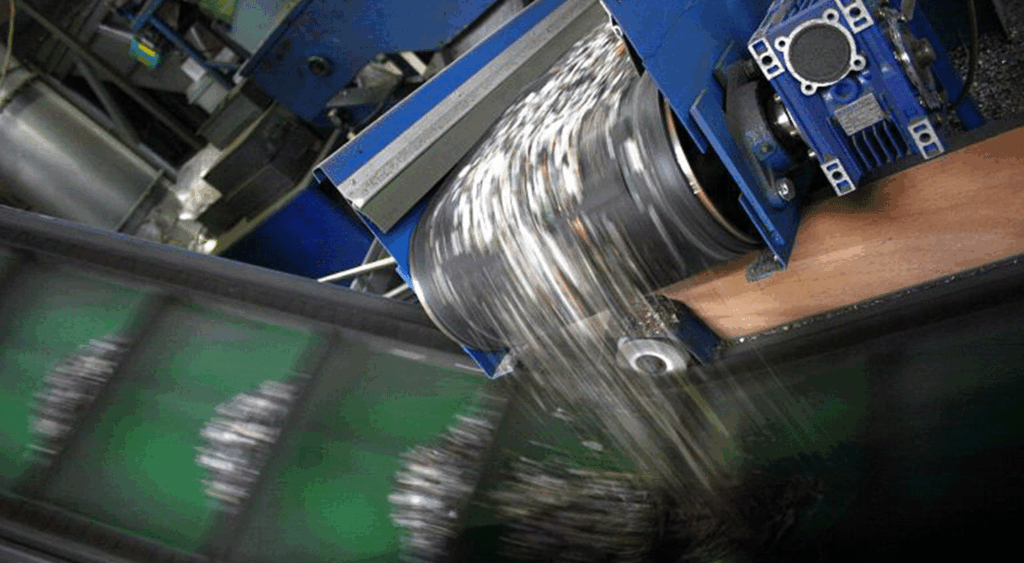
Once items have been depolluted and disassembled, remaining components are processed through industrial shredders that break down devices into smaller pieces, which allows for material separation.
The shredded material then passes through a series of automated separation systems. These systems may use technologies such as magnetic separation for ferrous metals and eddy current separation for non-ferrous metals like aluminum and copper. Some recyclers invest in advanced recycling equipment such as infrared for plastics, air separation for lightweight materials and robotics. These technologies ensure that metals, plastics, and other base materials are effectively sorted and isolated.
4. Commodity Recovery and Refinement
Once separated, the materials are prepared for reuse and sale.
The goal is to produce clean separated commodity streams of steel, aluminum, copper, plastics and metallic fines. Less contamination in the separated commodity streams is more environmentally friendly and makes it easier to reuse this recycled material in producing next generation products, supporting the circular economy.
5. Documentation and Compliance
At the conclusion of the recycling process, the ITAD provider should issue a Certificate of Destruction and/or a Certificate of Responsible Recycling.
These documents serve as formal proof that devices were properly recycled, all hazardous materials were handled responsibly, and the process met industry and environmental standards. This documentation is essential for audit readiness and regulatory compliance, particularly for organizations governed by e-waste laws or sustainability reporting frameworks.
Our global services enable clients to simplify their recycling program and improve accountability.
Let’s make e-waste one less thing you have to worry about
If you’re retiring thousands of assets and wondering what’s next, let’s talk. You bring the complexity. We’ll bring the clarity and a smarter ITAD strategy that meets you at scale.